


Medical tests and gynecological exams imposed on employees at Julio Iglesias’ residences: “They had access to all the results”
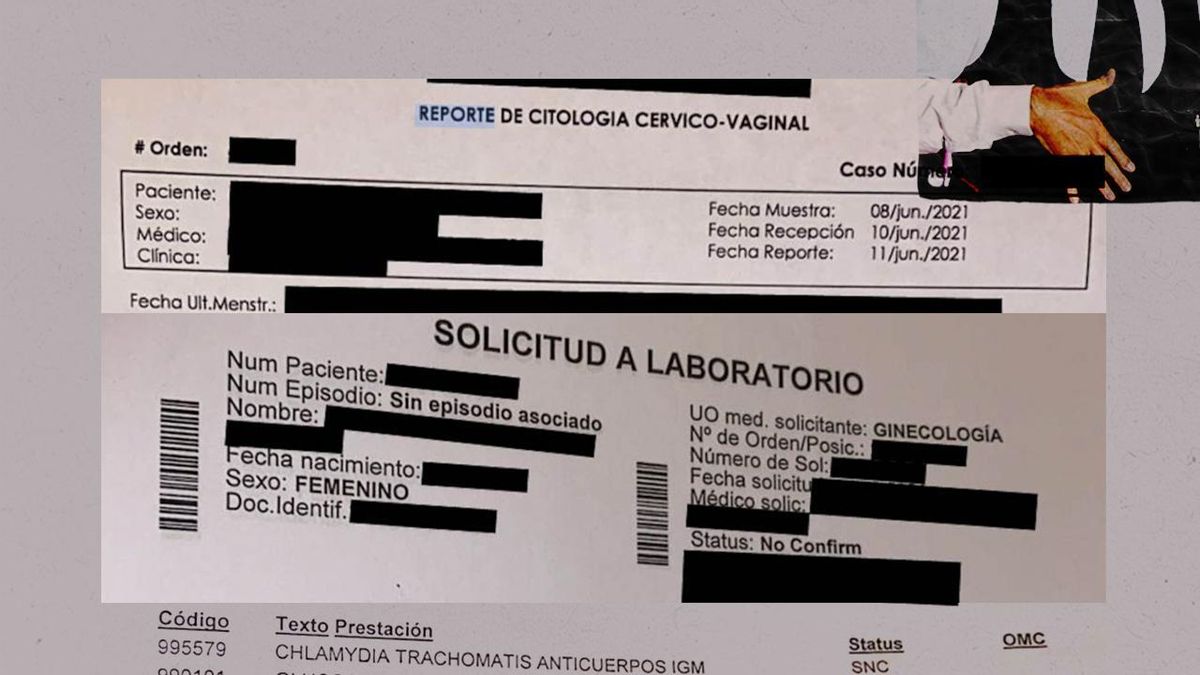
The documents show the hospital’s letterhead, the doctor’s name and signature, the name of each woman, the date of the tests, and the medical specialty: gynecology.
The tests that Julio Iglesias allegedly “imposed” on his employees bore little relation to the duties they were expected to perform at his mansions. They included tests for HIV, hepatitis, and chlamydia, among others.
Documentation reviewed by elDiario.es shows that the examinations carried out on female employees at the singer’s residence in the Dominican Republic also included pregnancy tests.
“He sent us girls to the gynecologist and for a general checkup. There were 10 or 12 of us. They did everything there—the gynecologist checked everything. Only the girls,” said Rebeca, one of the former employees who spoke with elDiario.es.
Carolina, another former employee who spoke with elDiario.es, also confirmed the existence of the medical examinations. “They sent us all to the doctor. They tested me for sexually transmitted diseases. They did ultrasounds and blood tests to see if we had any kind of illness. It didn’t seem normal to me,” she recalled.
Carolina, who has worked at other mansions, said she had never undergone a similar medical examination, although she had previously been required to take drug and HIV tests when being hired at another villa in the area.
Dominican law establishes penalties for public or private employers who subject their employees to HIV testing.
Although the Punta Cana resort employs a large workforce assigned to different areas and tasks, the two former employees emphasized that only women working as live-in domestic staff were sent, in groups, for these medical examinations, and that the employers subsequently had access to the results.
Pelvic ultrasounds
Two women who worked in the house told elDiario.es that the singer sent them, along with other employees, to undergo gynecological examinations and tests, and that he had access to their results. Another woman confirmed that, although she did not undergo the examinations herself, she overheard conversations in the house about them.
Some of the examinations included blood tests and pelvic ultrasounds, according to two women who spoke with elDiario.es. Their real names have been replaced with pseudonyms to protect their identities.
elDiario.es obtained the blood test results of one of the women, which include findings related to sexually transmitted infections, such as hepatitis B and HIV, as well as a pregnancy test.
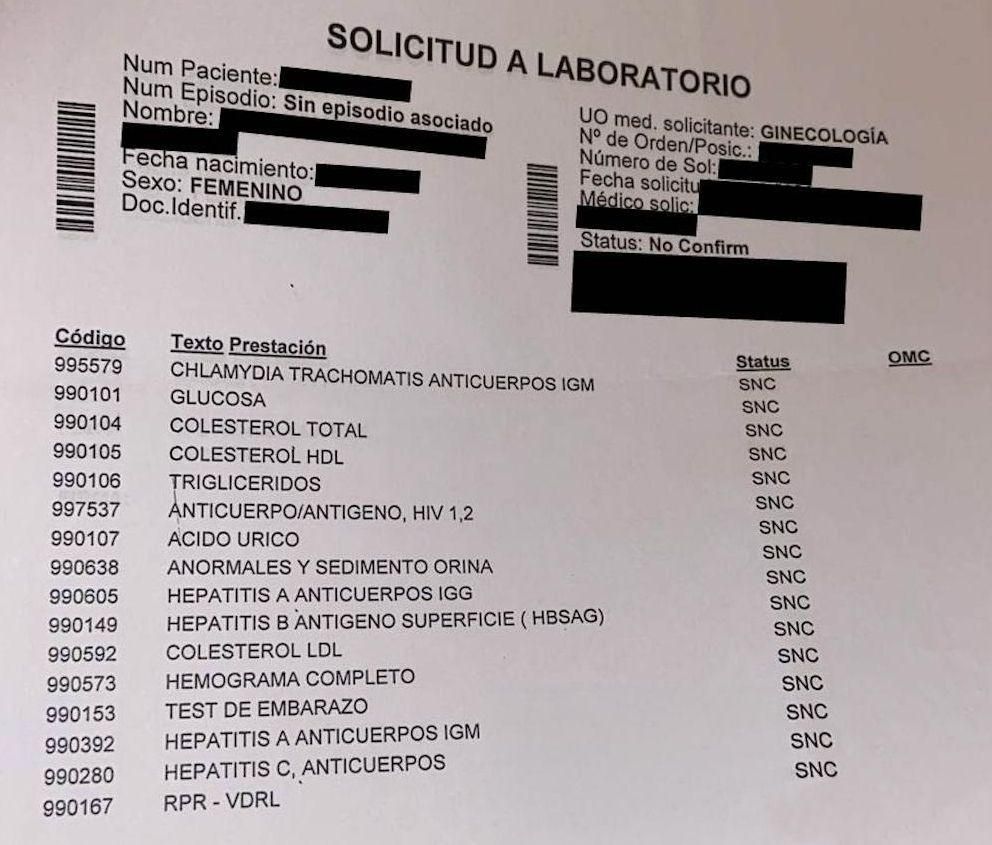
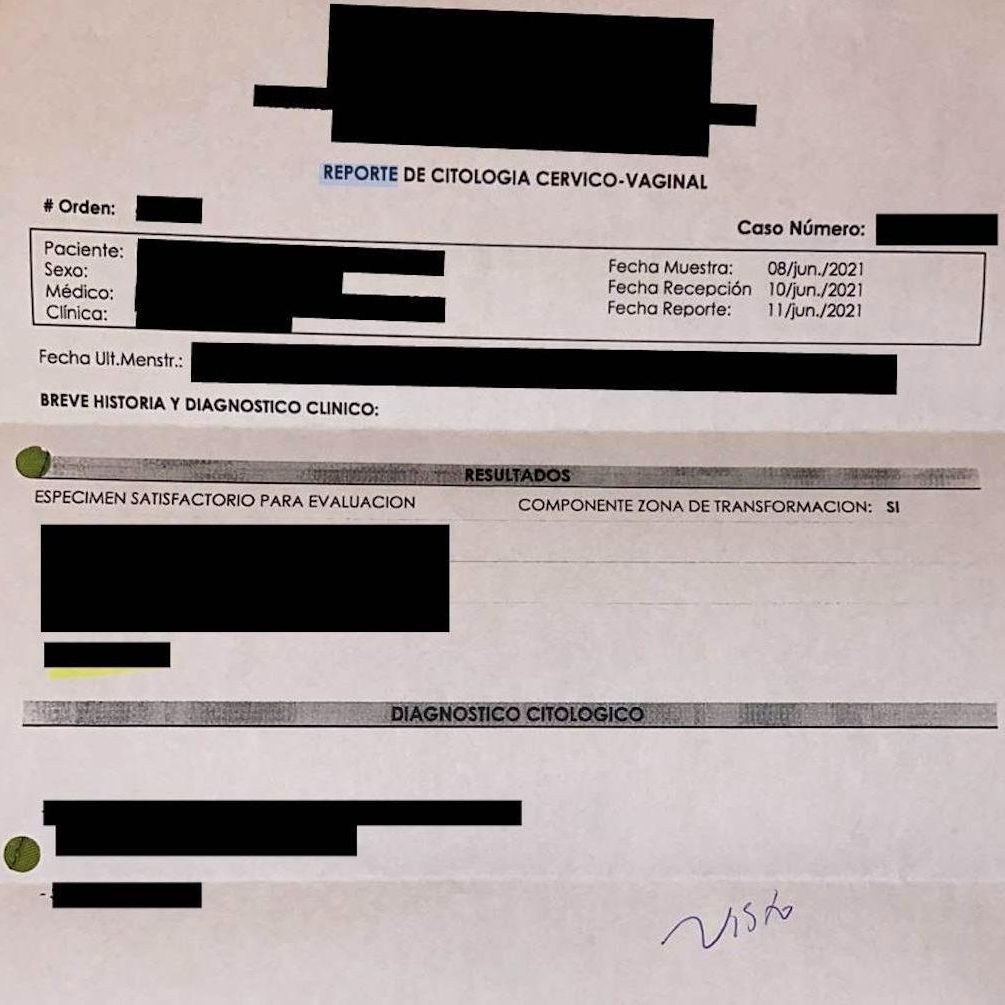
elDiario.es obtained documents showing that five women who worked at the villa throughout 2021 underwent gynecological examinations in June of that year at the private Hospiten Bávaro clinic, located near the singer’s mansion in Punta Cana.
Hospiten, founded in the Canary Islands, is one of Spain’s leading private hospital groups and operates facilities in several countries, including the Dominican Republic, where it opened its Punta Cana hospital in 2000.
elDiario.es contacted the Hospiten group for comment but had not received a response at the time of publication.
elDiario.es and Univision Noticias attempted on several occasions and through various channels over the past few weeks to obtain Julio Iglesias’ version of events but did not receive a response to their questions.
In a public statement issued after the publication of this reporting, the singer denied “having abused, coerced, or disrespected any woman.”
Results go to the household manager
The household manager at the Punta Cana residence kept a WhatsApp group with employees, which she used to share information and make requests. In a message to the group reviewed by elDiario.es and Univision Noticias, she asked the women to submit the medical test results they had undergone days earlier.
“Girls, please send me all the test results so we can see exactly what’s going on,” she wrote.
One of the women replied, “By photo or in person? Do we all have to send the results?”
The household manager responded, “In person. In case you need to take anything or whatever it takes to make sure you’re completely healthy.”
An investigation by elDiario.es, in collaboration with Univision Noticias, verified the message sent by the household manager to a WhatsApp group of employees in which she asked them to share their medical test results.
The supervisor has also not responded to messages from elDiario.es and Univision.
“They had access to all the results; I remember they reviewed everything,” said Carolina, who explained that the medical examinations did not take place before they were hired, but while they were already working at the mansion. The women also said they were all seen by the same doctor and that none of them paid for the tests.
Rebeca, for her part, said that although no one explicitly told them the tests were mandatory, they understood them to be part of working at the villa. “They didn’t exactly use the word ‘mandatory,’ but if we were working there… no one said no,” she said. “That’s just how things were in the house.”
Dominican law allows employers to require medical examinations only when they are directly related to the work an employee will perform and explicitly prohibits HIV and pregnancy tests.
A Dominican labor lawyer consulted about the country’s legislation—though not about the specifics of this case—said that requiring gynecological examinations of female employees violates the Labor Code, which protects “the integrity, privacy, and personal dignity of all types of workers.”
“Asking a domestic worker to undergo Pap smears or other gynecological tests is unacceptable under our system,” he said. “If they are doing that, it is illegal.
The Dominican Republic’s AIDS Law penalizes, through fines and compensation, “the request for HIV or HIV antibody testing by any private employer.”
As a general principle, labor and privacy laws in many countries prohibit employers from requiring pregnancy or HIV tests, mandating gynecological examinations, or accessing employees’ medical results.
International Labour Organization Convention 183, ratified by the Dominican Republic, requires states to adopt measures ensuring that “maternity does not constitute a ground for discrimination in employment.” The convention prohibits employers from subjecting female employees to pregnancy tests, except in limited circumstances—such as when national legislation bars pregnant women from certain jobs, or when a position poses a risk to the woman’s health or that of the fetus.
One example would be a pregnancy test required for a job in an X-ray room, where exposure could endanger fetal health.
According to sources at the International Labour Organization consulted by elDiario.es, the conventions ratified by the Dominican Republic—and therefore legally binding on the country—clearly establish that this type of medical testing is discriminatory.
“Gynecological examinations and pregnancy tests without justification constitute discrimination on the basis of sex, both in hiring and during employment, since they are performed only on women,” the ILO sources said.
Editing and fact checking: María Ramírez, Natalia Chientaroli, Raquel Ejerique, Federica Narancio and Esther Poveda
Translation: Jessica Weiss
Read the Spanish version here
You can read more about our investigation here.
If you have experienced or are aware of incidents similar to those described in this report, we invite you to contact us. You may send a text or voice message via WhatsApp to +34 646 35 35 34 or write to pistas@eldiario.es. All testimonies will be handled with complete confidentiality.

0